
Thinking About Selling Your Independent SEND or SEMH School?
You've Built a School That Makes a Difference. Who Will Help Protect Its Future?



Also, you may have spent years building a school that provides something children and young people genuinely need.
Perhaps you established an independent special school because you recognised that some pupils were not receiving the education, understanding or support they deserved.
Perhaps you created a specialist environment for children with autism, learning difficulties, social, emotional and mental health needs, or other complex educational requirements.
In addition, you may have built the school around a particular educational philosophy.
You may have invested in specialist teachers, therapeutic support, suitable premises, safeguarding arrangements and relationships with local authorities.
Over time, your vision became an organisation.
Similarly, an organisation with pupils, families, employees, responsibilities and financial commitments.
And perhaps now you are beginning to ask yourself some difficult questions.
- What is my independent school worth?
- Is now the right time to sell?
- What would happen to our pupils if I stepped away?
- Who would support our staff and leadership team?
- Could I bring in an investor without losing everything I have built?
- Could I sell part of the school while remaining involved?
- What if the school needs more capital than I can comfortably provide?
- What if changing funding arrangements, costs or regulation make the next few years increasingly difficult?
- And what if I simply want to retire?
These are not easy questions.
Equally, they become even more complicated when your business is also responsible for the education, safeguarding and wellbeing of children and young people.
I believe the future of a school deserves more than a transactional approach.
It deserves a thoughtful conversation about people, purpose, sustainability and what comes next.
Independent School Acquisitions, Investment and Succession
I am interested in conversations with you if you own or run an established independent school, particularly one providing specialist education for children and young people with special educational needs and disabilities (SEND) and social, emotional and mental health needs (SEMH).
My particular interest is in the Midlands, although suitable opportunities elsewhere in England will also be considered.
I am open to discussing:
- Complete school acquisitions
- Majority or minority investments
- Retirement and succession arrangements
- Phased exits
- Strategic partnerships
- Investment to support sustainable development
- Selected restructuring or turnaround situations
- Suitable mainstream independent school opportunities where a credible educational and commercial future can be demonstrated
I am interested in schools with strong educational leadership, sound safeguarding, credible financial foundations and a genuine commitment to their pupils.
Indeed, I also recognise that some schools face difficulties.
An honest conversation about those challenges can be worthwhile.
I invest in businesses, but I back people.
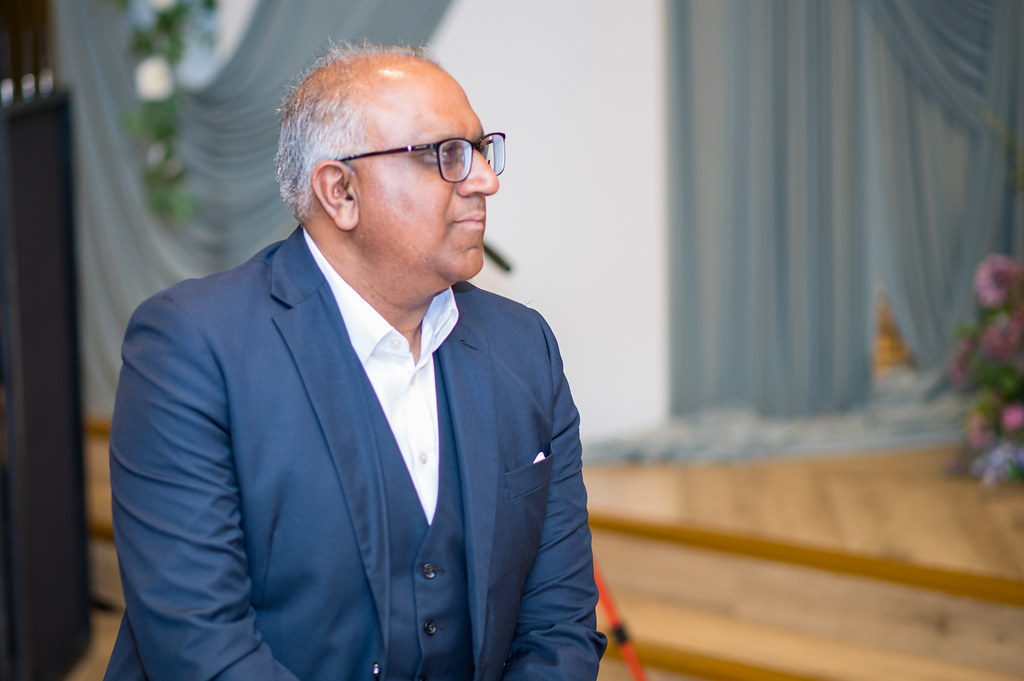
Founder to founder
Selling a School Is Different From Selling an Ordinary Business
A school is not simply a property, a balance sheet or a collection of contracts.
Overall, it is a community.
It is a place where children learn, develop confidence, build relationships and prepare for the future.
For pupils with additional needs, the right school environment can be especially important.
Consistency matters.
Trust matters.
Specialist understanding matters.
And the people delivering that education matter enormously.
As a school owner, you may have carried responsibilities that others rarely see.
You may have spent years recruiting specialist staff, managing difficult financial decisions, responding to inspection findings, working with local authorities and supporting families through challenging circumstances.
Additionally, you may have made personal sacrifices to keep the school moving forward.
You may have invested your own money.
You may have postponed holidays, worked long evenings or carried difficult decisions home with you.
Moreover, the school may be successful, but the responsibility can still become exhausting.
I understand why you may be deeply attached to an organisation you have created.
You do not simply want someone to buy the business.
Furthermore, you want to know that the new owner understands what the school is there to achieve.
You may want to protect the culture.
You may want to retain valued staff.
Likewise, you may want to see pupils continue receiving appropriate education and support.
And you may want a fair financial outcome for the years of work and risk you have invested.
I believe these objectives should be considered together.
A successful acquisition should recognise both the value of the organisation and the responsibility that comes with owning it.
A changing independent school landscape
The Financial Pressures Facing Independent Schools Have Changed
Also, the independent education sector has experienced significant changes in its financial and operating environment.
The questions around ownership, succession and sustainability may have become more urgent for you.
From January 2025, relevant private school education and boarding fees became subject to VAT at the standard rate of 20%.
In addition, in England, affected private schools with charitable status also lost eligibility for charitable business-rates relief from April 2025.
These changes have arrived alongside other financial pressures, including staffing costs, employer contributions, pension obligations, energy costs and the continuing expense of maintaining suitable educational premises.
The impact is not identical for every school.
Similarly, some institutions have been able to adapt their fees, cost structures and operating models.
Others have faced difficult decisions about affordability, pupil numbers, staffing, investment and their long-term future.
For smaller independent schools and owner-managed establishments, the pressure can be particularly personal.
Equally, you may be the person expected to find the solution.
The person who has to manage the cash flow.
The person who must explain difficult decisions to staff and parents.
And the person carrying the responsibility if the business can no longer operate in the same way.
I recognise that these pressures can prompt you to consider options you had not previously contemplated.
Retirement may need to happen sooner.
Indeed, a succession plan may become more urgent.
Investment may be needed.
A merger, acquisition or restructuring may become worth exploring.
A changing market does not automatically mean a school has failed. It may mean the organisation needs a different structure, different resources or different ownership for its next chapter.
When a school faces the possibility of closure
There May Be Important Decisions to Make Before the Doors Close
School closures are among the most difficult outcomes in education.
A closure affects more than you.
It affects pupils who may have established important relationships and routines.
Overall, it affects families who must find suitable alternative provision.
It affects teachers and support staff.
It affects local authorities, communities and other educational organisations.
Additionally, the independent school market has seen closures and consolidation amid changes in costs, taxation, pupil demand and the wider operating environment.
These developments may lead you to examine whether your school can remain sustainable on its existing basis.
If you are considering closure, an early conversation about the future may be valuable.
- Could a different ownership structure help?
- Is there a viable business that needs investment?
- Could the school benefit from stronger financial or operational management?
- Would a sale or partnership provide a realistic alternative?
- Are the premises suitable for another educational purpose?
- Is the school financially viable, or would restructuring be required?
Moreover, there are no automatic answers.
Not every school can be rescued.
Not every business is suitable for acquisition.
And a change of ownership cannot remove existing safeguarding, educational, contractual or financial obligations.
But I believe it is sensible to explore credible options before assuming there is only one possible outcome.
Where financial distress is serious, you should obtain timely advice from appropriately qualified insolvency, legal and education professionals.
Furthermore, the interests and welfare of pupils must remain central throughout.
My principal interest: independent SEND and SEMH schools
Specialist Education With a Clear Purpose
I am particularly interested in established independent schools providing specialist education to children and young people with additional needs.
This may include schools supporting pupils with:
- Autism and related support needs
- Social, emotional and mental health needs
- Learning disabilities and learning difficulties
- Communication and interaction needs
- Complex educational requirements
- Histories of disrupted education or school exclusion
- Multiple or overlapping needs requiring specialist provision
Likewise, I recognise that these are not interchangeable categories.
Different pupils require different environments, staffing models, teaching approaches, therapeutic support and safeguarding arrangements.
A successful specialist school must understand the needs of the children it serves.
Also, it must also have the resources and leadership to deliver appropriate education consistently.
What I Am Looking For
I am particularly interested in schools with:
- Established operations and an appropriate registration position
- A credible educational model
- Effective safeguarding and pupil welfare arrangements
- Capable school leadership
- A committed and appropriately qualified workforce
- Positive educational outcomes
- Constructive relationships with local authorities and families
- Sustainable funding and cash generation
- Suitable premises
- Clear governance and management information
- Realistic opportunities for responsible development
Not every school will meet every preference.
In addition, there may be areas requiring improvement.
What matters is understanding those areas honestly and determining whether a credible way forward exists.


Understanding SEMH education
Supporting Pupils Who Need More Than a Conventional Classroom
Schools specialising in social, emotional and mental health needs often work with pupils whose experiences of education have been complicated.
Similarly, some pupils may have experienced exclusion, disrupted attendance or difficulty accessing mainstream provision.
Others may require highly individualised teaching, therapeutic input, structured routines and carefully managed relationships.
The school environment must be designed around those needs.
Equally, that requires capable leaders and staff.
It requires appropriate behaviour and safeguarding systems.
It requires a realistic understanding of staffing ratios, specialist support and the costs involved in delivering a high-quality education.
Indeed, for me, a school’s educational approach and commercial sustainability must be considered together.
A school cannot deliver consistently if it lacks the resources to operate safely and effectively.
Equally, financial performance should not be pursued by compromising the provision pupils need.
The right investment should support the school’s educational purpose, not displace it.
An additional interest: mainstream independent schools
Could There Be a Different Future for Your School?
Although specialist SEND and SEMH provision is my principal focus for this page, I am also open to selected conversations with owners of mainstream independent schools.
Particularly where you are considering:
- Retirement or succession
- A complete or partial sale
- Investment to address financial pressure
- A strategic partnership
- Restructuring an established school
- The future of educational premises
- A credible change in educational provision
The financial pressures affecting mainstream independent schools deserve serious consideration.
However, a mainstream school cannot simply be relabelled as a SEND school.
Specialist education requires appropriate registration, staffing, expertise, facilities, safeguarding, leadership and a genuine understanding of pupils’ needs.
Any proposed change in the school’s educational model would require detailed assessment and the necessary regulatory processes.
Overall, I would only consider such an opportunity where there is a credible educational case, a realistic financial model and an appropriate route through the relevant approvals.
The objective should never be to change a school’s label merely to create a commercial opportunity.
It should be to determine whether the organisation or its premises have a responsible and sustainable educational future.
Perhaps you need a solution before you need a buyer
The Right Starting Point Is Understanding What Has Changed
Sometimes you contact a potential buyer because you are ready to retire.
Additionally, sometimes the situation is more complicated.
Perhaps the school has a strong reputation but needs investment.
Perhaps pupil numbers are changing.
Moreover, perhaps costs have increased faster than income.
Perhaps the school is overly dependent on you.
Perhaps the leadership team needs strengthening.
Furthermore, perhaps the premises require substantial expenditure.
Or perhaps the school is operating successfully, but you simply no longer want the responsibilities of ownership.
These circumstances require different approaches.
Likewise, I want to understand the challenge before discussing a transaction.
- What is working well?
- What is causing concern?
- What is the financial position?
- What is the quality of educational provision?
- What do you want to achieve?
- What matters most to the pupils, staff and families who depend on the school?
Sometimes a complete sale may be appropriate.
Sometimes a partial investment or phased exit may be worth considering.
Also, sometimes the first step is strengthening the school before any transaction.
And sometimes a transaction will not be appropriate.
I believe a responsible conversation begins with understanding the problem, not assuming that selling is always the answer.
My Approach - the Invested Investor
More Than Capital. More Than a Transaction.
I describe my approach as that of an Invested Investor.
In addition, I believe the best investments involve more than providing money.
They involve judgement, practical involvement, relationships, accountability and a willingness to understand the organisation.
An independent school may have excellent teachers but need stronger management systems.
Similarly, it may have a clear educational mission but need better financial planning.
It may have opportunities to expand but lack the capital or leadership capacity to do so responsibly.
It may depend on you as the person who has become central to every decision.
Equally, these challenges require more than a standard acquisition formula.
I believe in understanding the strengths of an organisation before considering what needs to change.
I value capable leaders.
Indeed, I value people who act with integrity.
I value responsible commercial decision-making.
And I value organisations where the purpose is reflected in daily practice, not simply in marketing language.
I invest in businesses, but I back people.

What is my independent SEND or SEMH school worth?
Understanding Value Beyond Pupil Numbers and Turnover
Overall, one of the first questions you will probably ask is:
What is my independent school worth?
The answer depends on the school.
A credible valuation needs to consider sustainable financial performance, educational quality, operating risks and the organisation’s ability to continue successfully under new ownership.
Financial Performance
Revenue, profitability, cash generation, working capital, debt and the sustainability of margins.
Pupil Numbers and Occupancy
Current pupil numbers, registered capacity, trends in admissions and the realistic sustainability of demand.
Local Authority Funding and Placement Arrangements
The nature of placement agreements, fee arrangements, payment terms, concentration of income and exposure to changes in commissioning.
Educational Quality
Inspection history, educational outcomes, curriculum delivery, leadership and the school’s ability to meet pupils’ needs.
Safeguarding and Compliance
Safeguarding arrangements, safer recruitment, governance, complaints, regulatory history and the school’s ability to meet applicable standards.
Workforce
Teacher recruitment, specialist staffing, retention, leadership capacity and reliance on key individuals.
Premises
Property ownership or lease arrangements, condition, accessibility, suitability and future capital expenditure requirements.
How Much Depends on You
Whether the school can continue operating effectively when you reduce or end your involvement.
Future Potential
Realistic opportunities for improvement or development, balanced against funding, staffing, premises and regulatory constraints.
Additionally, a school’s turnover alone does not determine its value.
Nor does the existence of demand for specialist education guarantee profitability.
The right assessment should recognise both the value already created and the responsibilities involved in sustaining it.
Moreover, I am not interested in creating unrealistic expectations through unsupported headline valuations.
VAT, business rates and the financial future of independent schools
Understanding the New Economics of School Ownership


Taxation has become an important part of the independent school ownership conversation.
The introduction of VAT on relevant private school fees from January 2025 has changed the financial calculations for many fee-paying schools.
Furthermore, the removal of charitable business-rates relief for affected private schools in England from April 2025 has added another consideration.
But it is important to distinguish between different educational models.
Mainstream Fee-Paying Schools
A school funded primarily through parental fees may need to assess affordability, pupil retention, fee increases, margin pressure and future demand.
Independent SEND and SEMH Schools
Likewise, a specialist school may depend primarily on local authority placements rather than direct parental fees.
Its financial model therefore requires particular attention to placement funding, fee agreements, staffing intensity, educational requirements and cash collection.
Importantly, specialist schools are not automatically outside the VAT rules.
Also, where fees are subject to VAT, the position of the school and the ability of a local authority to reclaim VAT must be understood correctly.
Schools With Mixed Provision
Some schools may have a combination of funding arrangements or educational services.
The VAT treatment may depend on the nature of the supplies and the relevant contractual circumstances.
In addition, these matters require professional tax advice.
For a potential acquisition, I would want to understand not just the school’s historical accounts but also how its financial model operates under current requirements.
That includes whether the school can continue to deliver the right educational provision while meeting its obligations.
Financial sustainability should support educational quality, not compete with it.
Can a mainstream private school become a SEND school?
A Possibility That Requires Careful Assessment
Similarly, you may be considering whether your premises and organisation could have a future in specialist education.
That is a question worth exploring carefully.
But there are important differences between mainstream and specialist provision.
Equally, a suitable building is only one part of the equation.
The school would need an appropriate educational model.
It would need leaders and staff with the necessary expertise.
Indeed, it would need safeguarding, behaviour, therapeutic and pupil-support arrangements suitable for the children it intended to serve.
It would need a credible funding model.
And it would need to satisfy the relevant Department for Education registration and material-change requirements.
Overall, a change of proprietor, school capacity, age range or special educational needs admissions may require prior approval.
Not every property or school will be suitable.
Not every proposed conversion will be commercially viable.
Additionally, I would be interested in understanding appropriate opportunities, but only where the educational and regulatory case can be established.
A sustainable specialist school must be built around the needs of pupils, not simply the availability of a building.
Profit with purpose
A School Must Be Financially Strong Enough to Deliver Its Mission
I believe profit and purpose belong together.
Education is a responsibility.
Moreover, it is also an activity that requires resources.
A school needs to pay its employees, maintain safe premises, invest in training, provide appropriate equipment and plan for the future.
For specialist provision, it may also need highly individualised staffing, specialist teaching resources and therapeutic input.
Furthermore, without commercial sustainability, the school may struggle to provide the consistency pupils need.
But financial performance should never be considered in isolation.
A responsible owner must understand how decisions affect pupils, staff and families.
Growth should not happen faster than the organisation’s ability to deliver well.
Cost management should not compromise safeguarding or essential educational provision.
Investment should strengthen the organisation’s capacity to meet its responsibilities.
For me, profit with purpose means building organisations that can remain both commercially sustainable and genuinely valuable to the people they serve.
My win-win-win approach
A Better Outcome for You, the School and Its Pupils
Likewise, I believe a thoughtful school acquisition should work towards three outcomes.
1. A Fair Outcome for You
You should have the opportunity to explore a sensible arrangement that recognises what you have built and supports your personal objectives.
2. A Sustainable Future for the School and Its People
The organisation should have capable leadership, appropriate resources, sound governance and a credible plan for continuity.
3. Continued Quality for Pupils and Families
Also, the education, safety, wellbeing and development of pupils should remain central to the school’s future.
These interests will not always align perfectly.
Difficult decisions may still be required.
But the aim should be to recognise those responsibilities and work towards a sustainable balance.
A successful transaction should create a stronger future, not simply a change of ownership.
Flexible acquisition and investment options
Your Exit Does Not Have to Happen All at Once
Your circumstances are your own.
I am open to exploring a range of possible structures.
Complete Acquisition
In addition, a full sale with an agreed transition and handover.
Majority Investment
A transaction in which an investor acquires a controlling interest, subject to the relevant legal and regulatory requirements.
Minority Investment
An arrangement in which you retain a significant ownership interest.
Phased Exit
Similarly, a structured transition allowing responsibilities and ownership to change over time.
Strategic Partnership
A partnership based on agreed educational, operational and commercial objectives.
Growth Investment
Investment intended to strengthen an existing school or support a credible development plan.
Selected Restructuring Situations
Consideration of an established school facing financial or operational pressure, where there is a realistic basis for continuity and improvement.
Any arrangement would depend on the school’s legal structure, finances, regulatory position, educational obligations and the parties’ objectives.
A change in ownership or provision may require prior regulatory approval.
Equally, no particular transaction structure or outcome is guaranteed.
Protecting your school's legacy
What You Have Built Deserves to Be Understood
Your school may have a distinctive culture.
You may have developed a teaching approach that works particularly well for your pupils.
Indeed, you may have assembled a leadership team that understands the needs of children who have struggled elsewhere.
You may have built relationships with local authorities, families and professionals over many years.
Those achievements matter.
Overall, an acquisition should begin by understanding what is already working.
That does not mean promising that nothing will ever change.
Schools must adapt to changing educational, regulatory and financial requirements.
But change should be informed, proportionate and responsible.
The objective should be to protect the organisation’s strengths while addressing the issues that may limit its future.

Preparing your school for sale or investment
The Best Time to Prepare May Be Before You Decide to Exit
You do not need to be ready for an immediate sale to begin a conversation.
However, preparation can create more options.
Useful areas to review include:
- Clear financial accounts and management information
- Reliable pupil numbers and funding records
- Placement agreements and fee arrangements
- Safeguarding and safer recruitment records
- Educational and inspection history
- Leadership and governance structures
- Workforce planning and retention
- Property ownership or lease commitments
- Insurance and material contractual obligations
- Taxation and VAT treatment
- Capital expenditure requirements
- How much depends on you
- A realistic educational and commercial development plan
For a school facing financial pressure, timely advice can be especially important.
Additionally, the earlier you understand the school’s position, the more informed your decisions can be.
You do not need to have decided
An Early Conversation Can Still Be Valuable
Perhaps you are ready to retire.
Perhaps you want to sell in two or three years.
Moreover, perhaps the school needs investment.
Perhaps you are concerned about rising costs.
Perhaps you are considering restructuring.
Furthermore, perhaps you own a mainstream independent school and want to explore whether there is a credible future under different ownership or provision.
Or perhaps you simply want to understand how a potential investor might view your organisation.
You do not need to have all the answers.
Likewise, the first conversation is an opportunity to understand your circumstances and explore whether there may be a sensible way forward.
I also welcome introductions from accountants, school brokers, lawyers, corporate finance advisers, educational consultants and other professional contacts.
Let's Talk About What Comes Next
You may have spent years creating a school that gives children and young people opportunities they might otherwise have struggled to access.
Also, you may be proud of everything you have achieved.
But perhaps the responsibility of ownership has become more demanding.
Perhaps you want to retire.
In addition, perhaps the school needs investment.
Perhaps the changing financial environment has made you reconsider the future.
Or perhaps you simply want to explore your options with someone who understands that education is about more than numbers.
Similarly, I cannot promise that every conversation will lead to an acquisition or investment.
But I believe a thoughtful discussion can help clarify what comes next.
If you are considering selling your independent SEND or SEMH school, exploring investment or discussing a credible succession plan, I would welcome hearing from you.
Frequently asked questions
Your Questions Answered

Do you buy independent SEND schools?
I am interested in discussing suitable acquisition and investment opportunities involving established independent SEND schools in England, subject to commercial, educational, legal and regulatory assessment.
Do you buy SEMH schools?
Yes, SEMH provision is a particular area of interest where the school has a credible educational model, appropriate safeguarding, capable leadership and sustainable foundations.
Do you consider mainstream independent schools?
Potentially. My principal interest is in specialist education, but I am open to selected mainstream independent school opportunities where there is a credible educational and commercial rationale.
Can I sell my independent school if I am approaching retirement?
Yes. Retirement and succession are common reasons for beginning a conversation about ownership.
What is my independent SEND or SEMH school worth?
Value depends on sustainable earnings, pupil numbers, funding arrangements, educational quality, safeguarding, workforce, premises, regulatory position, dependence on you and future prospects.
Are independent SEND schools exempt from VAT on fees?
Not automatically. VAT treatment depends on the nature of the supplies and funding arrangements. Where local authorities fund qualifying placements, they may be able to reclaim VAT. Specialist tax advice is important.
Has VAT affected the independent school market?
The introduction of VAT on relevant private school fees has changed the cost environment for many schools. The extent of the impact varies depending on funding, parental affordability, pupil demand and other operating pressures.
Can you help if my school is struggling financially?
I am open to discussing selected situations where financial or operational challenges are disclosed honestly and there is a credible basis for improvement. An acquisition or investment cannot be guaranteed. If you are facing serious financial distress, you should obtain timely specialist advice.
Can a mainstream independent school become a SEND school?
Potentially, but not automatically. Such a change requires a suitable educational model, specialist expertise, appropriate premises, financial viability and the necessary regulatory approvals.
Can I sell part of my school and remain involved?
Potentially. A partial sale or retained interest may be considered depending on the legal structure, circumstances and regulatory requirements.
Can I step back gradually?
A phased transition may be possible where it provides a workable arrangement for you and the school.
What happens to staff after a sale?
Employment obligations, leadership arrangements and the continuity of educational provision must be considered carefully.
What happens to pupils and families?
Their welfare, safeguarding and continuity of education must remain central. Any transition must account for the school’s obligations and the practical needs of pupils and families.
Does Ofsted inspection history matter?
Yes. Inspection findings, educational quality and compliance are important factors when assessing an independent school.
Does a change of proprietor require approval?
A change of proprietor or certain changes to a school’s registered details may require prior approval from the Department for Education. The precise requirements depend on the transaction.
Do you consider schools outside the Midlands?
Yes. The Midlands is my starting point, but suitable opportunities elsewhere in England may be considered.
Do I need a school broker?
No. I welcome direct approaches from you and introductions from professional advisers.
What information do you need initially?
A short overview of the school, location, educational provision, approximate pupil numbers, financial position, leadership structure and your preferred outcome is sufficient to begin. Please do not send pupil-identifiable records, safeguarding files or sensitive personal information in an initial enquiry.
Can I contact you several years before I intend to sell?
Yes. Early discussions may help you understand your options and prepare for succession or a future transaction.
Let’s Talk About What Comes Next
I cannot promise that every conversation will lead to an acquisition or investment, but I believe a thoughtful, confidential discussion is a good place to begin. Equally, you do not need to have decided anything.
People. Purpose. Partnership.
Copyright © 2022-25 Safaraz Ali. All rights reserved. site by expressive design | web design Birmingham